
- Children's Eye Care
- July 2026
Your daughter got her first pair of glasses last year. She picked the frames out herself, and the world snapped into focus the moment she put them on. Twelve months later, you’re back at the eye doctor, and the prescription is already stronger.
That kind of jump isn’t unusual. Childhood nearsightedness, or myopia, often progresses steadily while a child is still growing, with the prescription climbing with each visit. What many parents don’t realize is that today’s pediatric eye care has tools that can slow that progression, not just react to it.
At Campus Eye Group, the experienced team works with families across Hamilton and Princeton on myopia management, a clinically backed approach to keeping a child’s final adult prescription as low as possible. Here’s what that actually means and how to tell if your child is a candidate.
Correcting Myopia vs. Managing Myopia
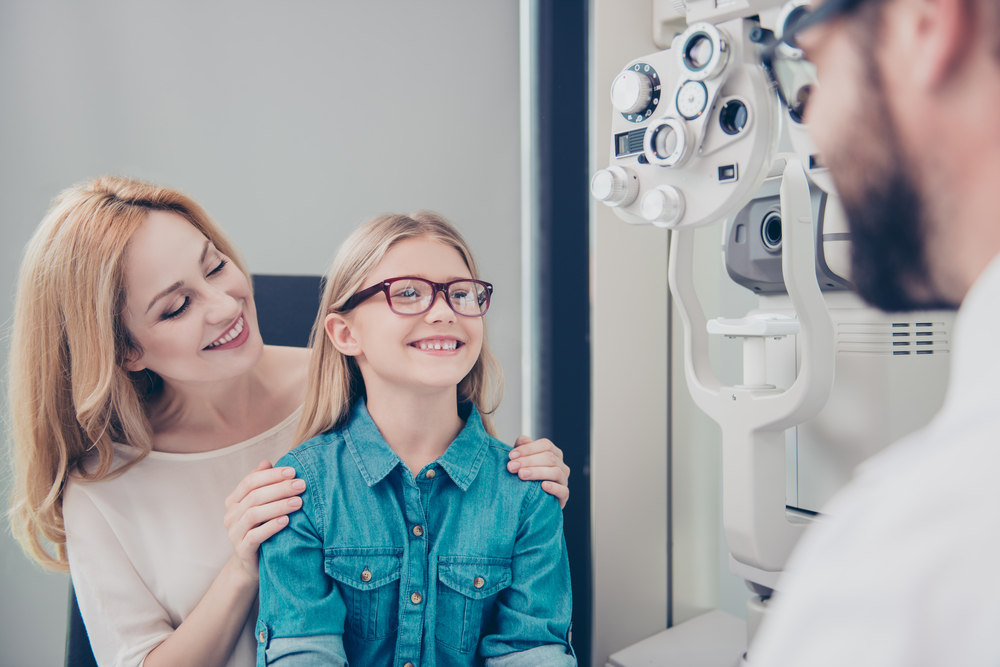
A standard pair of glasses or contact lenses corrects the blur. Light gets refocused onto the retina, and your child can read the whiteboard again. What those lenses don’t do is change the underlying reason the prescription got stronger in the first place: the eyeball itself is growing slightly too long from front to back.
Myopia management is different. It uses specific lens designs or eye drops to send signals to the eye that slow that elongation. The blur still gets corrected. The eye also grows more slowly. By the time the child reaches adulthood and the prescription stabilizes, the final number is significantly lower than it would have been without intervention.
Think of it as treating two problems with one approach: today’s vision and tomorrow’s prescription.
Why Slowing Progression Matters More Than Parents Realize
If a higher prescription only meant thicker lenses, most parents would shrug it off. The reason myopia management has become a focus in modern pediatric eye care services is that high myopia, generally defined as a prescription of -6.00 diopters or stronger, carries an elevated lifetime risk for serious eye conditions.
Those include retinal detachment, glaucoma, myopic maculopathy, and early cataracts. The longer the eye, the more the retina gets stretched, and the thinner the supporting tissue becomes. Each additional diopter of myopia is associated with an increase in the lifetime risk of these complications, which is why even a small slowdown in progression pays off decades later.
That’s the real argument for early intervention. A child whose myopia stops at -3.00 instead of -6.00 will likely still need correction as an adult and may be a strong candidate for LASIK once the prescription stabilizes in their early twenties. They also carry significantly less long-term risk than a peer who progressed unchecked.
How Myopia Management Actually Works
There are three categories of treatment with strong clinical evidence behind them. The right combination depends on the child’s age, prescription, lifestyle, and the rate at which the myopia is progressing.
Specialty Contact Lenses
Two contact lens options dominate the field. Orthokeratology, often called Ortho-K, uses rigid gas-permeable lenses worn overnight that gently reshape the cornea while the child sleeps. They take the lenses out in the morning and see clearly all day without glasses or daytime contacts. Ortho-K can slow myopia progression by roughly 40 to 50 percent over several years of consistent wear.
The second option is a dual-focus daily soft lens, with MiSight being the best-known and the only one FDA-approved for myopia control in children ages 8 to 12 at the start of treatment. The lens has zones that correct distance vision in the center and create a separate optical signal in the periphery that discourages eye elongation.
Both options are fitted through specialty contact lens consultations, since the measurements and follow-up visits are more involved than a routine fitting.
Low-Dose Atropine Eye Drops
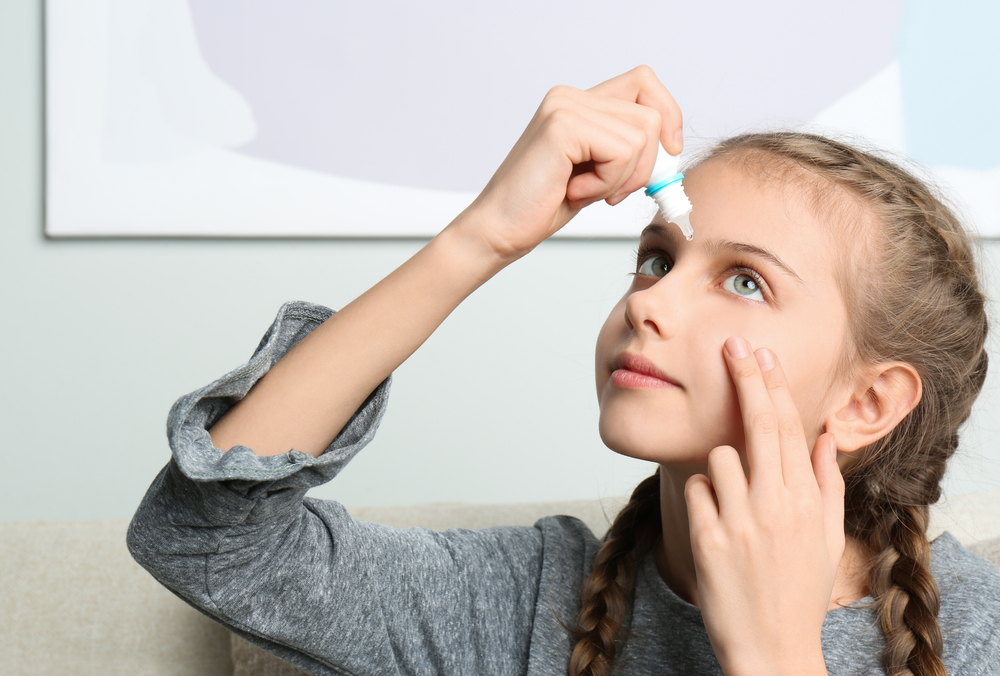
A single drop of diluted atropine, typically at a concentration of 0.01% to 0.05%, in each eye at bedtime can slow myopia progression by roughly 30 to 60 percent. It’s a strong choice for younger children, kids who aren’t ready for contacts, or families looking for a low-maintenance option to combine with daytime glasses.
Lifestyle Adjustments
These aren’t replacements for clinical treatment, but they meaningfully help. Aim for at least 90 minutes of outdoor time daily, since natural light appears to slow eye elongation. Encourage the 20-20-20 habit during homework and screen time: every 20 minutes, look at something 20 feet away for 20 seconds. Keep reading material and tablets about a forearm’s length from the face.
Signs Your Child May Be a Candidate for Myopia Management
Most children who benefit from myopia management share a common profile. The prescription showed up before age 12, sometimes as early as 6 or 7. It’s worsened by at least 0.50 diopters between annual exams.
There’s a family history of myopia, especially if one or both parents needed glasses as kids. Another sign of myopia management candidacy is that the child spends long hours on near work, including reading, gaming, and screen-based homework, and gets relatively little time outdoors.
Age matters too. The strongest evidence supports starting between ages 6 and 14, while the eye is still actively growing and progression is most rapid. Starting later doesn’t mean it won’t help, but the window of greatest benefit is in those elementary and middle school years.
What to Expect at the Evaluation
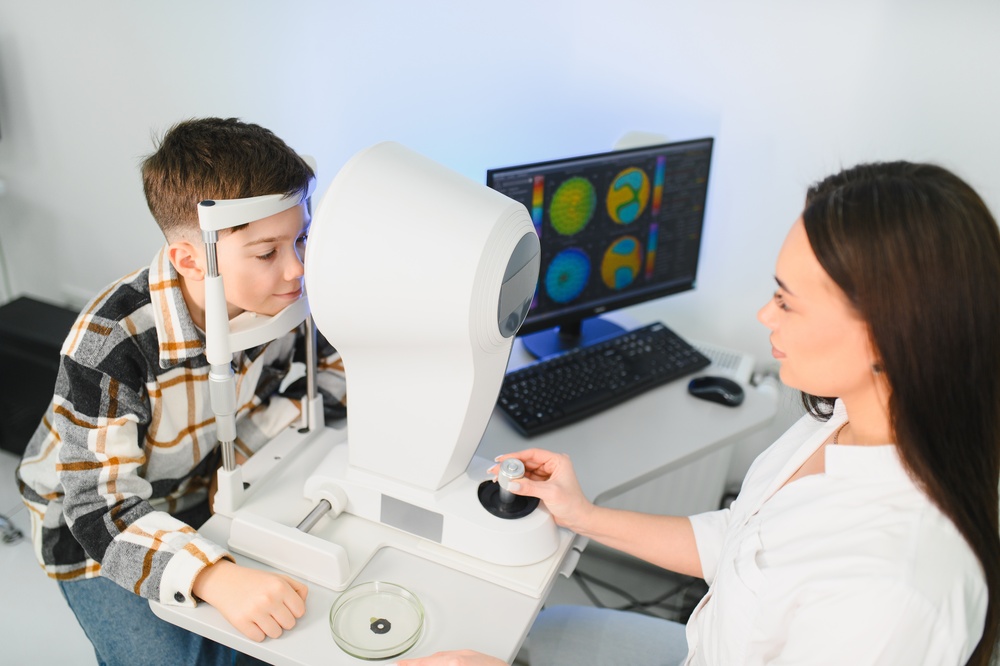
The first step is a comprehensive pediatric eye exam that goes beyond a basic prescription check. The doctor will look at the current refraction, the progression history if previous records are available, the health of the retina and macula, and ideally an axial length measurement that tracks how much the eyeball has grown. Axial length is the single most useful number for monitoring myopia management over time, since it gives a direct read on whether a treatment is working.
From there, the conversation turns practical. Some children are great candidates for overnight lenses, but won’t be comfortable handling rigid contacts. Others do well with daily soft lenses but need a parent’s help with insertion for the first few weeks. Atropine drops require buy-in from a child who’ll be putting drops in nightly for years. The right treatment is the one the family can stick with.
Follow-up visits typically run every six months. At each visit, the doctor checks the prescription, measures axial length again, and adjusts the plan if progression isn’t slowing as expected.
Your Next Step Toward Slowing Your Child’s Myopia
Myopia that worsens year after year isn’t something to wait out. The earlier the conversation happens, the more leverage there is to change the final outcome.
Wondering whether your child’s worsening prescription could be slowed with myopia management? Schedule an appointment at Campus Eye Group in Hamilton, NJ, today.
 BACK TO ALL BLOGS