
- Keratoconus
- October 2026
You’ve had to get a new glasses prescription three times in the last two years. Each time, your eye doctor updates your prescription and says your new glasses will be clearer, and for a while, they are. But soon, things get blurry again. Headlights start to look like halos on your windshield, and reading highway signs at night feels like trying to see through fog.
On their own, these changes don’t seem unusual. It’s normal to need new prescriptions as your eyes change over time. But if your vision changes quickly and new glasses never seem to fully fix the problem, keratoconus could be the cause.
Here’s what early keratoconus usually looks like, what can increase your risk, and how the doctors at Campus Eye Group can spot it early to help protect your treatment options.
A Cornea That’s Losing Its Shape
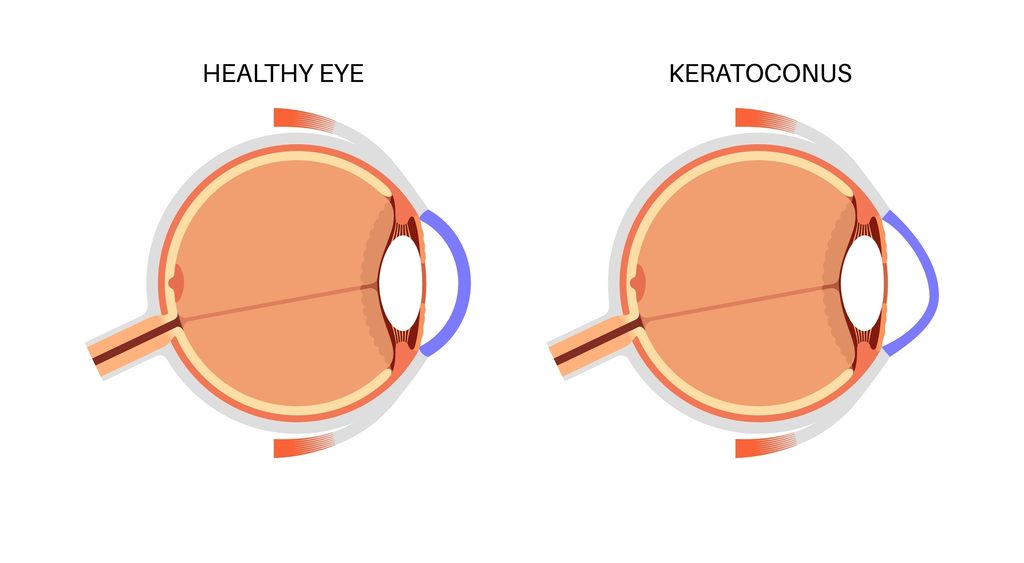
Your cornea is meant to be a smooth, evenly curved dome at the front of your eye. With keratoconus, this curve changes. The tissue thins in one spot, and the cornea bulges outward, becoming more cone-shaped. As a result, light doesn’t focus properly on your retina, so things like street signs and phone screens can look blurry or fuzzy around the edges.
Keratoconus usually appears between ages 10 and 25, but it can keep getting worse for many years after it starts. About 10 percent of people with keratoconus have a parent who also had it, so family history is more important here than with regular nearsightedness.
Frequent Prescription Changes
One of the first signs is a prescription that keeps changing. Your vision gets blurry, you get new glasses, and within six months to a year, things are blurry again. This happens because your cornea keeps changing as keratoconus worsens, so last year’s glasses don’t match this year’s needs.
Most people think this is just bad luck or a normal part of getting older. But if you’re in your teens, twenties, or thirties and need new prescriptions more often than your eye doctor expects, bring it up at your next appointment, even if you don’t notice any other problems.
Glare, Halos, and Trouble Driving at Night
Light sensitivity can be an early sign, and it’s often most obvious at night. Headlights from oncoming cars can look like starburst halos. Streetlights may look smeared instead of sharp. Some people say it feels like driving through light rain, even on a clear night.
This happens because the uneven shape of the cornea scatters light instead of focusing it to one spot. Regular nearsightedness or astigmatism can cause some glare, but if you also have frequent prescription changes and more trouble seeing at night, the cornea itself may be changing shape.
Irregular Astigmatism
Regular astigmatism happens when the cornea is shaped more like a football than a basketball, and glasses usually fix it because the shape is predictable. With keratoconus, the distortion is different. The cornea’s surface becomes uneven in ways that can change from one eye exam to the next, so glasses that worked last year might not help much this year.
Seeing ghost images or double vision, like when a single letter on an eye chart looks like it has a faint twin, is common at this point. If your eye doctor has told you you have astigmatism, but your glasses never fully clear your vision, it may be time to have your cornea’s shape checked more closely.
Family History and Other Risk Factors Worth Knowing
Beyond family history, other factors can increase your risk of keratoconus. Down syndrome, Marfan syndrome, Ehlers-Danlos syndrome, and sleep apnea are all linked to a higher chance of corneal thinning. Having one of these doesn’t mean you’ll develop keratoconus, but it’s a good idea to tell your eye doctor if any apply to you or someone in your family.
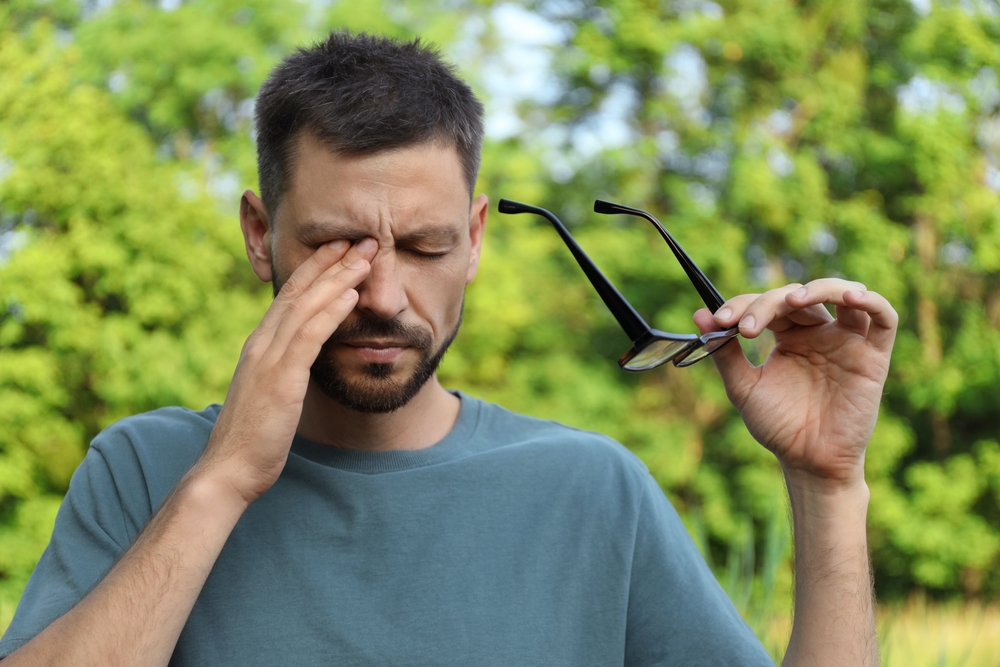
Eye doctors also closely monitor chronic eye rubbing, especially in people with eye allergies or eczema. Repeated mechanical pressure from rubbing is thought to weaken the cornea over time, and breaking that habit is one of the few preventive steps available before any formal diagnosis. If you rub your eyes often and also deal with seasonal allergies, treating the allergy itself can reduce how much you’re rubbing without even thinking about it.
How Early Detection Helps
Early detection of keratoconus starts with a comprehensive eye exam, the same baseline visit used to check for glaucoma, cataracts, and other conditions. From there, a few specific tests confirm changes in your cornea’s shape.
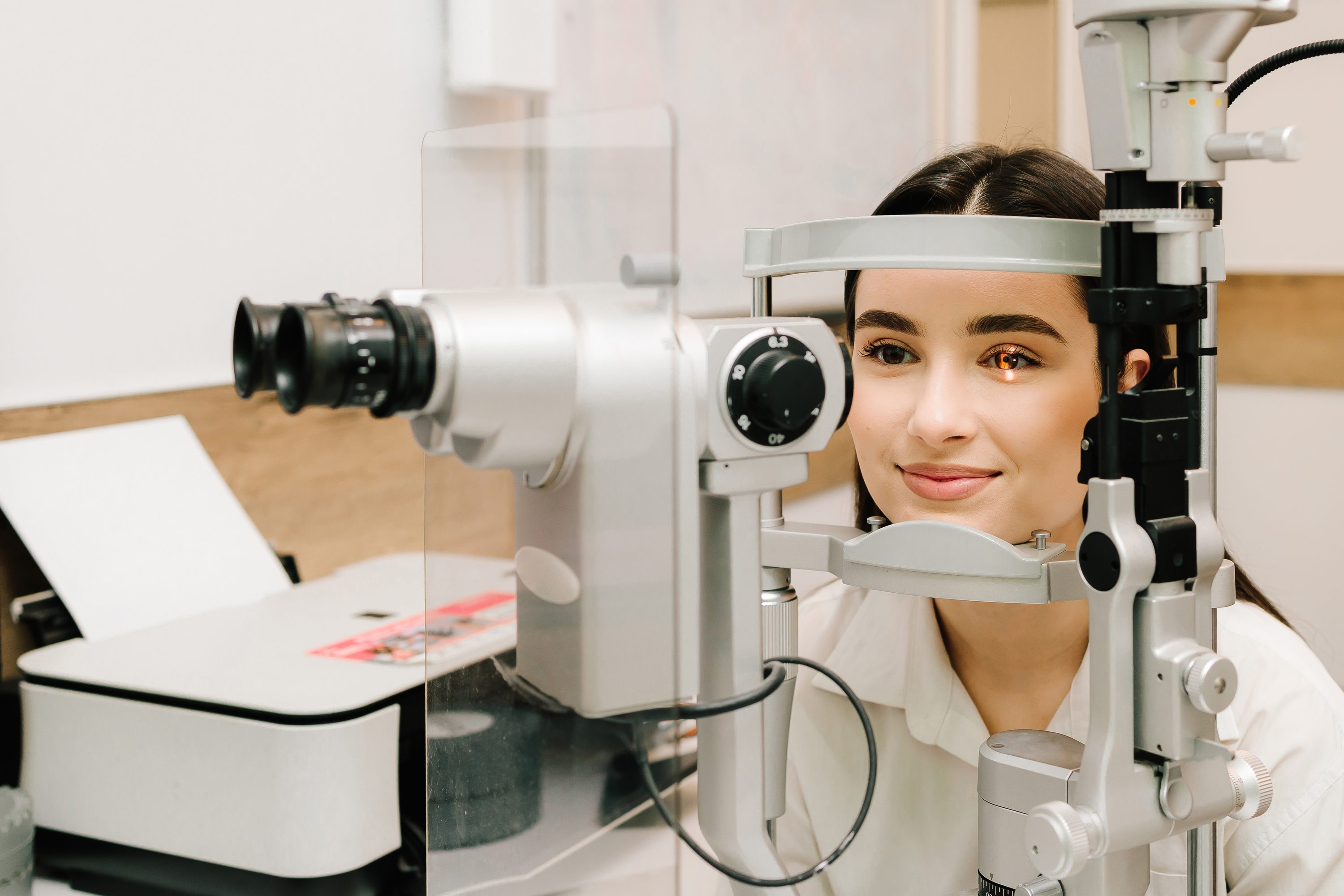
Keratometry measures how light reflects off your eye’s surface to detect early changes in its curvature. Corneal topography goes further by mapping the entire surface of your cornea in detail, so it can find irregularities long before they show up on a regular vision test.
These tests take only a few extra minutes, but they can mean the difference between catching keratoconus early, when contact lenses still help, and catching it later, when your options are more limited. If you have any of the symptoms above, especially with a family history, ask about corneal mapping at your next eye exam.
Your Next Step Toward Protecting Your Vision
Early diagnosis changes treatment options. If caught early, many people can manage keratoconus with specialty contact lenses, such as scleral or hybrid lenses, that correct vision without surgery. If the condition progresses, choices narrow to corneal cross-linking or, in advanced cases, a corneal transplant.
None of these signs alone mean you definitely have keratoconus. Frequent prescription changes, night glare, and hard-to-correct astigmatism can also have other causes. But if you notice several of these signs, especially with a family history, it’s worth talking to your eye doctor instead of waiting to see if things improve on their own.
Noticing your prescription keeps changing or night driving feels harder than it used to? Schedule an appointment at Campus Eye Group in Hamilton, NJ, today.
 BACK TO ALL BLOGS