
- Diabetes
- August 2026
You feel fine; your vision seems sharp enough to read street signs, scroll your phone, and drive without squinting. So when your primary care doctor mentions scheduling a dilated eye exam again this year, it’s tempting to push it down the list. Nothing about your eyes feels different from last year, or the year before that.
That instinct is exactly what makes diabetic eye disease so dangerous. Damage to the retina from diabetes builds quietly, often with no symptoms at all until vision has already been affected. An annual dilated exam is the only reliable way to catch that damage while it’s still treatable, which is why it belongs on the same list as your A1C check and your blood pressure reading.
What Does Diabetes Do to the Retina?
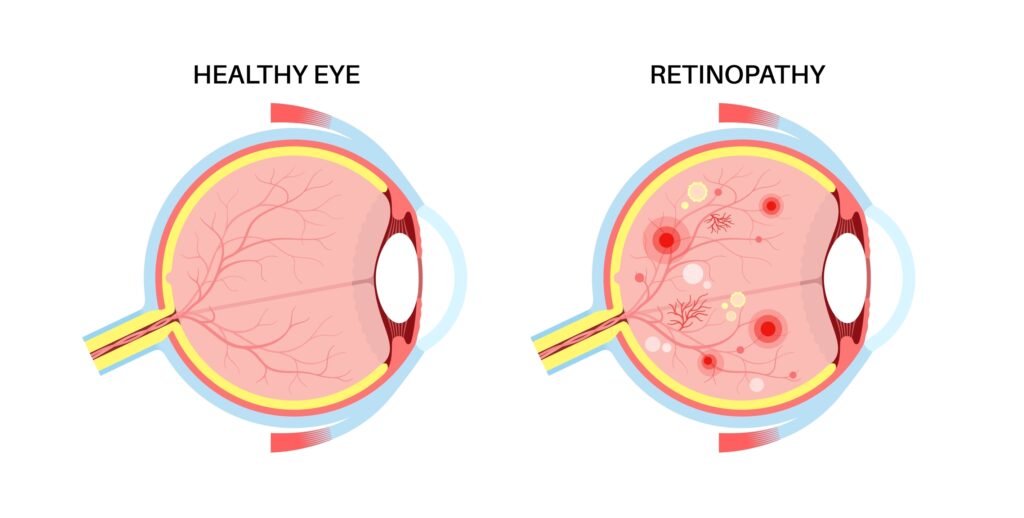
The retina relies on a dense network of small blood vessels to stay nourished and functioning. Elevated blood sugar levels over time weaken the walls of those vessels. They can leak fluid or blood into the retina, swell, or close off entirely. When enough vessels become blocked, the eye responds by growing new blood vessels to compensate. Those new vessels are fragile and prone to bleeding, and this progression is what eye doctors call diabetic retinopathy.
Early on, the changes are microscopic. A doctor can see them through a dilated pupil years before a patient notices anything wrong with their sight. That gap between the biological damage and the point where a person actually notices vision changes is the entire reason annual screening matters so much for anyone managing diabetes.
Why Symptoms Often Go Undetected
Vision loss from diabetic eye disease tends to follow a frustrating pattern. The disease can progress from mild to severe while central vision remains completely normal, because the earliest damage often occurs outside the part of the retina responsible for sharp, detailed sight. By the time a patient notices floaters, blurriness, or dark spots, the underlying damage may already be extensive.
Macular edema, a buildup of fluid in the central retina, follows a similar path. It can develop gradually enough that patients adjust to slightly blurrier vision without realizing anything has changed. Once vision loss from these conditions sets in, some of it may not be reversible, even with treatment.
The Numbers Behind the Recommendation for Annual Exams

The Centers for Disease Control and Prevention has been direct about the stakes here. People with diabetes face a risk of blindness roughly 25 times higher than people without the condition. Glaucoma, cataracts, and other eye disorders also tend to develop earlier and more frequently in people with diabetes. Diabetic retinopathy specifically is the leading cause of blindness among working-age adults in the United States, and public health researchers project it will affect around 16 million people with diabetes nationally by 2050.
Despite those numbers, the CDC estimates that roughly 60% of people with diabetes skip their annual eye exam. That gap matters because the same research shows more than 90% of diabetes-related vision loss can be avoided through early detection and treatment.
Keeping blood glucose under control also helps directly: data cited by the CDC shows that medication to lower blood glucose can reduce the risk of diabetic retinopathy by about 25%. Annual exams and blood sugar management work together, not as separate strategies.
What Happens During a Diabetic Eye Exam?
A comprehensive eye exam for someone with diabetes goes beyond a standard vision check. Along with testing visual acuity and checking intraocular pressure, the exam includes dilation, in which drops widen the pupil so your eye doctor can examine the back of the eye directly. During a dilated eye exam, your eye doctor looks specifically at the retina, optic nerve, and macula, searching for leaking vessels, swelling, or abnormal growth patterns that signal retinopathy.
This part of the exam takes a few extra minutes and causes temporary light sensitivity and blurred near vision for several hours afterward, so plan on a ride home with a friend or family member. If the exam shows signs of advanced retinopathy or bleeding, patients may be referred to retina specialists who focus on treating vitreoretinal disease and can intervene before permanent vision loss occurs.
Beyond the Retina, What Else Gets Checked?

Diabetes doesn’t only raise the risk for retinopathy. Glaucoma and cataracts both occur earlier and more often in people with diabetes compared to the general population, and both can also be detected during the same dilated exam.
Scheduling one annual visit effectively covers screening for several conditions at once, each of which shares the same advantage: they’re far easier to manage when caught early than after vision has already been affected.
Your Next Step Toward Protecting Your Vision
Diabetes management is often measured in numbers like A1C and blood pressure, but eye health belongs on that same tracking list. Wondering whether it’s time for your diabetic retinopathy screening? Schedule an appointment at Campus Eye Group in Hamilton, NJ, today.
 BACK TO ALL BLOGS